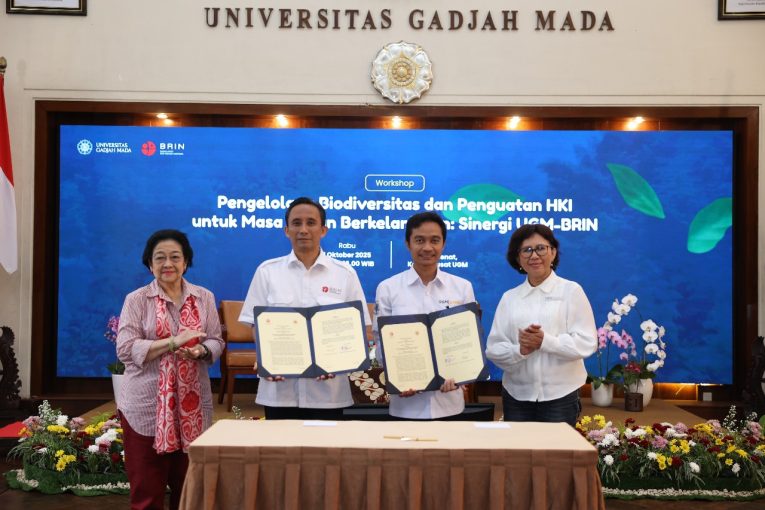
Yogyakarta, October 1, 2025 – Universitas Gadjah Mada (UGM) and the National Research and Innovation Agency (BRIN) have reaffirmed their commitment to advancing research and the downstreaming of Indonesia’s tropical biodiversity. This commitment was solidified through the signing of a strategic agreement during the “Biodiversity Management and IPR Strengthening for a Sustainable Future: UGM-BRIN Synergy” workshop. The event, held at the UGM Senate Hall on Wednesday (October 1), was graced by the presence of the Head of the BRIN Steering Committee, Prof. Dr. (H.C.) Hj. Megawati Soekarnoputri. The Rector of UGM, Prof. dr. Ova Emilia, M.Med.Ed.,Sp.OG(K)., Ph.D., articulated that this collaboration represents a pivotal step in bolstering the biodiversity research ecosystem. She further stated, “This synergy between UGM and BRIN is anticipated to yield innovations with a tangible impact on Indonesia’s sustainable development.”
Prior to the main proceedings, Megawati Soekarnoputri performed a symbolic planting of a Bodhi tree (Ficus religiosa) in the courtyard of the UGM Balairung. The Dean of the UGM Faculty of Forestry, Sigit Sunarta, elucidated that the selection of this particular tree was attributed to its profound philosophical significance. “The Bodhi tree symbolizes wisdom and tranquility, serving as a conduit between humanity and nature,” Sigit explained. In her address, Megawati Soekarnoputri underscored the paramount importance of nationalism in the advancement of research. She asserted, “The younger generation must leverage their knowledge and capabilities to ensure Indonesia’s independence, sovereignty, and enduring prosperity. The reinforcement of research endeavors must be complemented by a steadfast commitment to environmental protection.”
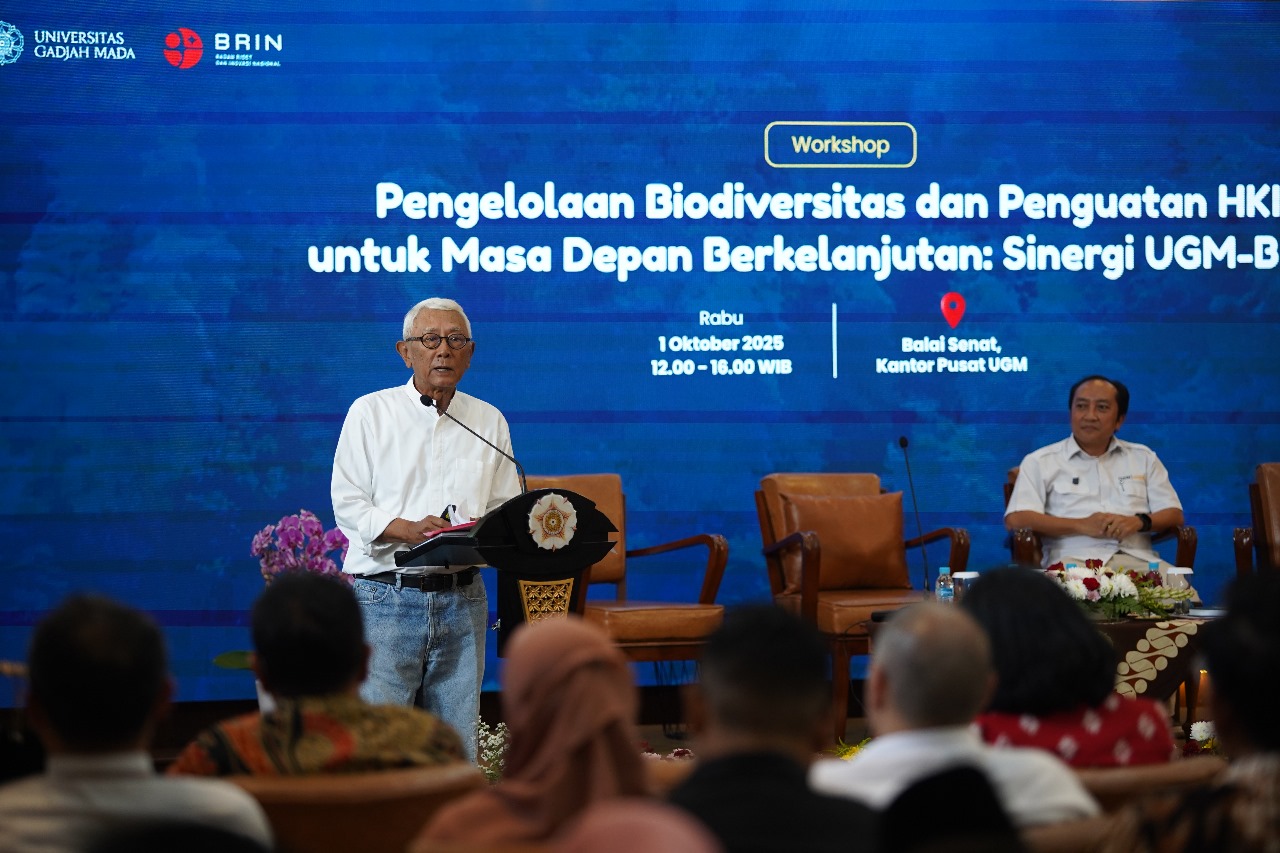
Dr. Bambang Kesowo, S.H., LL.M., a Member of the BRIN Steering Committee, emphasized in his keynote speech that the national management of biodiversity is inextricably linked to robust Intellectual Property Rights (IPR) governance. He cautioned that without clear legal safeguards, the outcomes of research and Indonesia’s abundant biological assets would be susceptible to external exploitation. “Strengthening IPR constitutes a crucial bedrock in upholding the nation’s sovereignty over its rich biodiversity potential,” stressed Bambang. He additionally encouraged UGM to broaden the scope of IPR education and comprehension beyond the Faculty of Law, extending it to other faculties such as agro-complex, science, and socio-humanities disciplines.
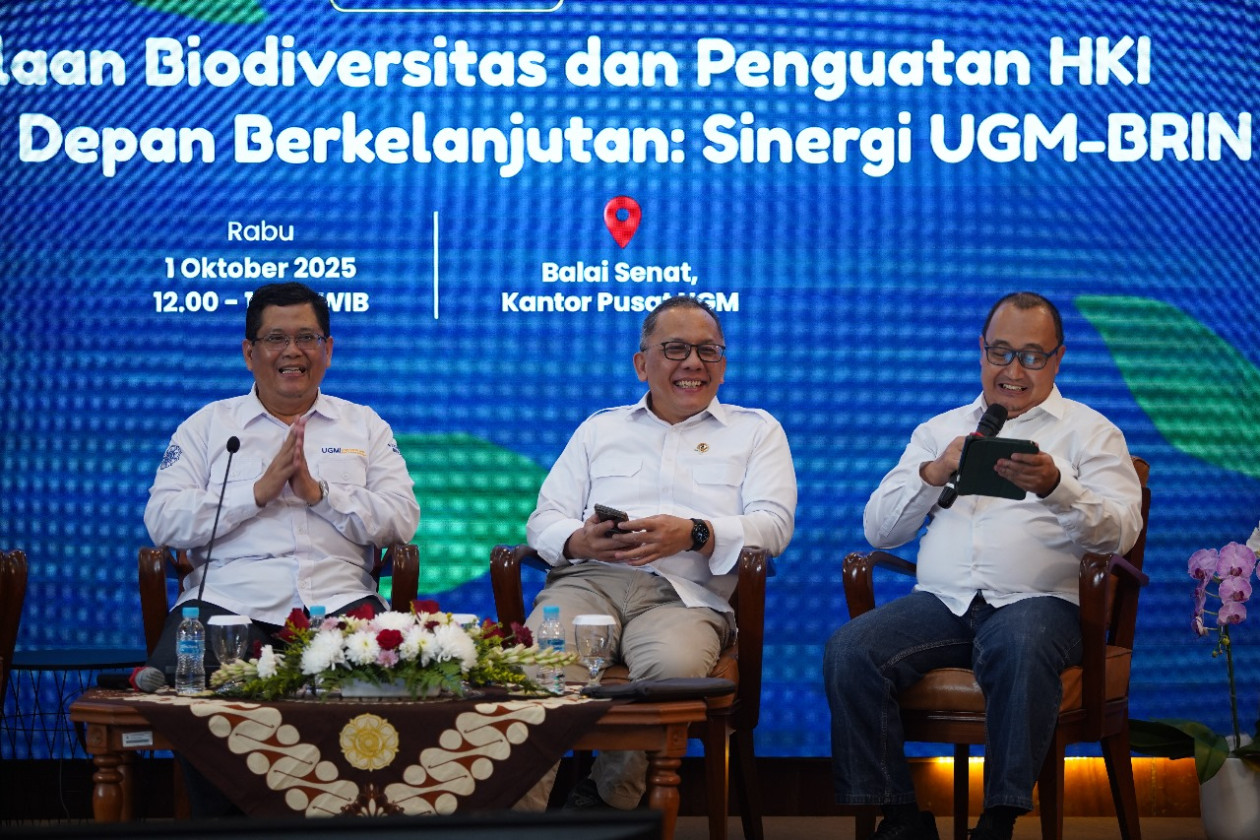
The Head of BRIN, Dr. Laksana Tri Handoko, articulated that biodiversity research should be directed not solely towards conservation but also towards sustainable utilization that supports critical sectors such as food, pharmaceuticals, renewable energy, and climate change mitigation. He deemed collaboration with UGM as strategically vital, as it possesses the potential to generate innovations pertinent to industrial and societal requirements, concurrently fortifying Indonesia’s research network on a global scale. He revealed, “Research in biodiversity needs to be directed not only at conservation but also at sustainable utilization that supports the food, pharmaceutical, renewable energy, and climate change mitigation sectors.”This workshop served as the occasion for the formal signing of a Joint Agreement (MoU) between BRIN and UGM concerning the preservation and utilization of tropical biodiversity by the Vice-Rector for Research, Business Development, and Cooperation of UGM, Dr. Danang Sri Hadmoko, S.Si., M.Sc. Furthermore, a Cooperation Agreement (PKS) pertaining to the management of intellectual property derived from biological resources was also signed by the Acting Director of Business Development of UGM, Prof. Ir. Sang Kompiang Wirawan, S.T., M.T., Ph.D. UGM has demonstrated significant accomplishments in the protection of biodiversity IPR. In 2024, UGM registered 28 copyrights and 30 biodiversity patents, while in 2025, up until September, 11 copyrights and 19 patents have been successfully registered. This data unequivocally illustrates UGM’s commitment not only to fostering innovation but also to reinforcing legal protection over national biodiversity.
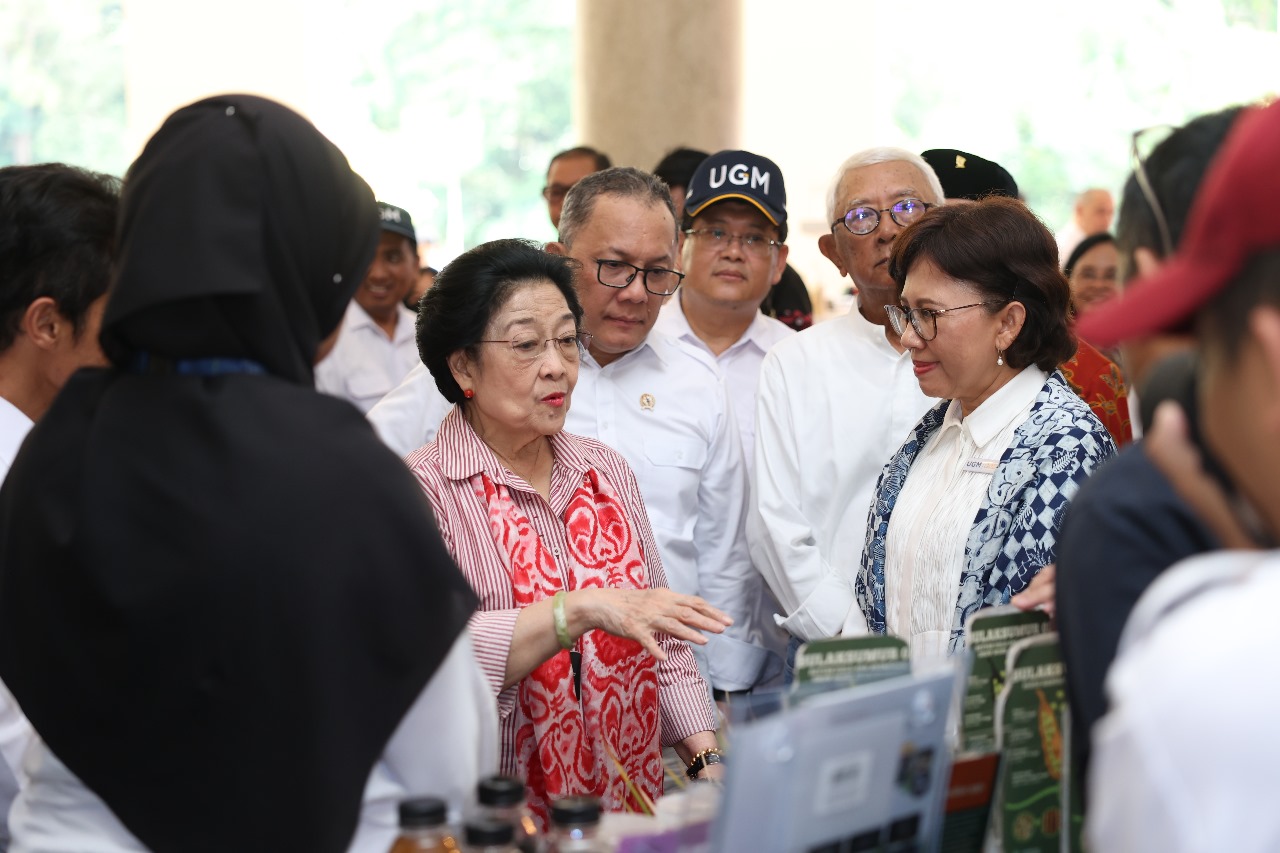
The workshop also featured a presentation on the Status and Trends of the Indonesian Biodiversity Index (IBI) by the Dean of the UGM Faculty of Biology, Prof. Dr. Budi S. Daryono, M.Agr.Sc., alongside a mini-expo showcasing UGM’s biodiversity downstreaming research findings, which highlighted various innovations stemming from Indonesia’s tropical biological wealth. Through this workshop, UGM further solidifies its standing as a prominent center for tropical biodiversity research, contributing not only to the advancement of science but also offering concrete solutions for sustainable development within Indonesia.